

Hit enter to search or ESC to close
Featured Products
Featured Products

Featured Products

Select your region
-
Europe
-
Americas
-
Africa and Middle East
-
Asia Pacific
Detergent free wipes for geriatric care
This study evaluates the feasibility of using minimal-ingredient, detergent-free wipes—originally designed for infants—as a gentler alternative for fragile geriatric skin in nursing home settings. Qualitative results from 71 residents suggest these wipes are effective, well-received by staff, and potentially offer time and cost savings compared to traditional cleansing methods.

Geriatric skin, marked by its fragility and increased susceptibility to damage, necessitates specialized care to prevent discomfort and skin conditions. Traditional cleansing methods such as using cloths and tap water, and disposable wet wipes containing numerous ingredients and potential unnecessary additives raise concerns about hygiene and skin irritation. This study explores the feasibility of using detergent free /minimal ingredient wipes, originally designed for neonatal skin, in geriatric care settings. These wipes are formulated with ultra-purified water and fruit extract only, achieving the low surface tension of the liquid component necessary for effective cleansing, that is comparable with additive-containing wipes. Here, a survey across four Irish nursing homes (N = 71 residents) employing qualitative methods to assess staff and resident experiences was conducted. Results demonstrated that minimal ingredient wipes were perceived as soft, effective in cleansing, and well-suited for incontinence episodes and bed baths. Feedback suggested potential time and cost savings. The wipes were well-received, highlighting their potential as a valuable addition to geriatric care routines. Although further research is needed for validation and wider application, this study signifies a promising shift toward innovative approaches to improve hygiene, comfort, and overall well-being of older residents in care settings using skin cleansing wipes containing minimal ingredients.
Introduction
Geriatric skin is characterized by fragility and heightened sensitivity, making it particularly vulnerable to insult and injury as people age. With the natural progression of aging, the skin undergoes significant changes, becoming thinner and less pliable and therefore drier and more delicate (Farage, Miller et al. 2008, Hurlow and Bliss 2011). This age-related degeneration in suppleness significantly decreases skin viability, often leading to discomfort and skin conditions such as irritation, incontinence-associated dermatitis, and a higher risk of pressure ulcers especially among frail nursing home residents (Runeman 2008, Hurlow and Bliss 2011). Cleansing the skin in these populations may typically be done using cloths, tap water and soap and/or single use wipes (Al-Samarrai, Uman et al. 2007, Beeckman, Verhaeghe et al. 2011, Groven, Zwakhalen et al. 2017, Veje, Chen et al. 2019, Tai, Hsieh et al. 2021). However the use of such cloths which may be used, laundered, and re-used has the potential to transmit infection (Bockmühl, Schages et al. 2019). To circumvent these potential hazards, single use wipes have demonstrated effectiveness in skin cleansing and are widely used not only in geriatric care (Groven, Zwakhalen et al. 2017, Veje, Chen et al. 2019, Archer, Smyth et al. 2021, Konya, Nishiya et al. 2023) but also in other vulnerable populations such as children and neonates (Price, Lythgoe et al. 2021, Rogers, Thomas et al. 2021).
To effectively cleanse the skin, the liquid component of wipes must possess low surface tension (Corazza, Lauriola et al. 2010, Liu 2020). The lower the surface tension, the easier it is for liquid to spread over the skin and wet deeper within the skin’s pores and crevices to encapsulate dirt and debris for removal (Liu 2020). To lower the surface tension, most commercially available wipes contain surfactants and various other additives (Liu 2020). These effectively lower the surface tension to <40 mN/m, allowing more efficient dirt and debris removal than using cooled boiled water which typically has a surface tension of >70 mN/m . However, these compounds may cause dryness, itching, irritation, and inflammation, which may be amplified if residue containing these compounds remains on the skin after wiping (Aschenbeck and Warshaw 2017, Liu 2020). In the aged skin, these unwanted effects may have serious implications if the skin becomes broken and infected (Surber, Brandt et al. 2015).
One commercially available detergent free /minimal ingredient wipe containing no surfactants, initially developed to cleanse the delicate skin of neonates, may prove suitable for use in adult care settings. The minimal ingredient wipe contains only ultra-purified water and fruit extract (resultant pH near neutral), which together are non-irritating and can match the surface tension of most other commercially available wipes without the need for surfactants or other additives.
In one prospective study in neonates, the minimal ingredient wipes demonstrated superior results in comparison to two other wipe brands containing significantly more ingredients. Findings showed that babies cleansed with the minimal ingredient wipe were less likely to have clinically significant irritant diaper dermatitis than those cleansed with the other two brands (Price, Lythgoe et al. 2021). A further evidence-based literature review developed standardized perineal care guidance that incorporated the use of the minimal ingredient wipes. After implementation of this guidance, the incidence of diaper dermatitis decreased by 16.7%, with severe cases decreasing by 34.9% (n = 1070) (Rogers, Thomas et al. 2021).
Having proved suitable for neonatal skin cleansing, the feasibility of using these minimal ingredient wipes in geriatric care was assessed. A pilot survey was commissioned in four Irish care homes in 2019 to investigate whether the detergent free /minimal ingredient wipe would prove both more hygienic, efficient, and easier than using cloth and cooled boiled water, and gentler to fragile skin than surfactant and additive-containing wipes. Here, we present the evidential basis for cleansing skin effectively with a minimal ingredient wipe containing only ultra-pure water and fruit extract and how this relates to caring for sensitive skin, as well as the results from the pilot survey.
Rationale
Low liquid surface tension is crucial for effective skin cleansing, and this has traditionally been achieved using surfactants and other additives (Liu 2020). However, whilst these surfactant-containing wipes may be more effective than cloth and boiled water, there remains the risk of adverse skin reactivity and irritation arising from the added additives (Liu 2020).
The detergent free /minimal ingredient wipe achieves low liquid surface tension that is comparable with surfactant-containing wipes and lower than boiled tap water in laboratory tests (Figure 1) . In these minimal ingredient wipes, this is accomplished in two ways: ultra-purified water and addition of fruit extract. The proprietary process of seven distinct stages through which ‘raw’ water is ultra-purified (being a combination of decontamination, filtration and softening, plus the addition of fruit extract) results in an end-stage liquid component with low surface tension (<35 mN/m) comparable with other additive and surfactant-containing wipes and significantly lower than that of boiled tap water (>70 mN/m) (Figure 1.b).(Data on File)
Minimal ingredient wipes have also been shown to preserve the integrity of commensal skin flora. Normal healthy skin is colonized by a diverse community of microorganisms, including bacteria, fungi, and viruses, which collectively constitute the skin flora. These microorganisms create a dynamic ecosystem that forms a protective barrier against pathogens, may help regulate immune responses, and promotes skin homeostasis. The microbiota competes with pathogenic microorganisms for space and nutrients, preventing their colonization and subsequent infections (Grice and Segre 2011). The bacterium Staphylococcus epidermidis produces antimicrobial peptides (bacteriocins) (Newstead, Varjonen et al. 2020), and aids in maintaining the skin’s protective barrier (Zheng, Hunt et al. 2022), in turn keeping pathogenic bacteria such as Staphylococcus aureus in check (Severn and Horswill 2023). Additionally, maintaining the diversity of the commensal skin flora aids in ensuring the strongest pool of protective species (Wallen-Russell 2019). Preserving the natural skin flora and avoiding the indiscriminate use of additives that can eliminate the commensal microbiota may help to guard against infections (Harris-Ray 2022). The minimal ingredient wipes have been both shown to neither adversely affect the balance of S. epidermidis/S. aureus populations on this skin, nor disturb the microbiota diversity, in a series of certification experiments (Figure 2). (Data on file)
The Pilot Nursing Home Survey
Background
In the domain of geriatric care, maintaining adequate hygiene for residents is crucial. Traditionally, care facilities have used methods involving cloths, dry wipes, and tap water for hygiene routines. Understanding these practices provides the context for this Pilot Nursing Home Survey (PNHS) which aimed to explore whether the existing use of minimal ingredient wipes in neonates could be applicable in cleansing aged skin.
Methodology
An exploratory qualitative survey aimed at evaluating the utilization of detergent free /minimal ingredient wipes for geriatric care was conducted across four nursing homes in Ireland (N = 71 residents, with some nursing homes having previously used the minimal ingredient wipes, and some that had not). There were two core objectives of the PNHS: 1) the investigation of prevailing usage patterns and behaviours concerning personal hygiene care before the integration of the minimal ingredient wipes; and 2) an exploration of the nursing home staff experience with the minimal ingredient wipe. The survey comprised three phases: covering the pre-trial, trial, and post-trial periods. The study was executed across four diverse nursing homes, each varying in bed capacity (90 bed, 57 bed, 120 bed, and 29 bed). Importantly, the study incorporated a mix of communication methods, encompassing both verbal and non-verbal interactions, to accommodate the communication abilities of the participating residents.
In the pre-trial phase, a survey moderator conducted interviews with key staff members from each nursing home. One staff member per nursing home (representative of all stakeholders in the nursing home) returned answers to the survey moderator by either completing a questionnaire or a phone interview. This initial phase was aimed at obtaining comprehensive insights into the existing hygiene care practices and the underlying attitudes towards using fabric cloths, dry wipes and warm water plus soap or shower gel, or disposable wet wipes. Pre-trial attitudes to the use and knowledge of the minimal ingredient wipes were also collected. Moving on to the trial phase, each nursing facility was provided with 150 packs of the minimal ingredient wipes to trial over a span of three weeks, from January 07, 2019 to January 29, 2019. In the post-trial phase feedback was gathered approximately ten days after the initial pre-trial interviews in the same manner (one staff member per nursing home to represent all stakeholders). This post-trial phase aimed to capture insights into the perceived advantages, disadvantages, and the various contexts of wipe usage. The detergent free wipes were to be used on any resident in the care facility.
Results and Conclusions of the PNHS
Initially, understanding of existing standard of care in residents’ personal hygiene routines was gathered. The four nursing homes typically favoured using either fabric cloths or disposable dry wipes which were soaked in warm water with added shower gel or soap for odour control. Dry wipes were disposed after one use, and fabric cloths were laundered and re-used.
The study gathered positive feedback relating to the use of detergent free /minimal ingredient wipes in geriatric care. The minimal ingredient wipes were considered soft, non-abrasive, and of high quality, with a lack of scent that did not dry out the skin. They were also found to be effective in cleansing the skin during incontinence episodes and bed baths, requiring fewer materials compared with traditional methods such as dry wipes and warm water, as they were more effective at cleansing first time. The convenience, quality, and efficacy of the wipes were identified as key factors for decision-makers in nursing homes. Some respondents noted mixed feelings on the moisture content of the wipes, in that an additional skin drying stage was necessary after use. Before the trial, staff were informed to pat the skin dry (as opposed to wiping dry) with a clean dry towel or dry wipe if necessary, to not injure the skin. Further, some respondents reported a feeling of ‘coldness’ when using the minimal ingredient wipe.
The study showed that the detergent free/ minimal ingredient wipes offered a potential solution to reduce the time required for hygiene care, particularly for incontinence episodes and bed baths. The wipes were also suggested for use in other areas of the nursing homes, such as the dining room for cleansing the face and hands before and after meals, and the art room to clean paint from hands. Importantly, none of the nursing homes experienced any adverse skin reactions to the wipes.
The PNHS demonstrated that minimal ingredient wipes have the potential to be a valuable addition to geriatric care in nursing homes. The reported convenience, quality, and efficacy of the wipes make them a favourable option for improving hygiene care practices and enhancing the overall well-being of elderly residents. The positive feedback and willingness of nursing homes to continue using the wipes post-trial indicate a promising future for the adoption of such products in geriatric care settings.
Discussion
The positive feedback obtained from care staff and residents regarding the minimal ingredient wipes underscores their potential as a valuable addition to the existing arsenal of skin cleansing methods in the geriatric population. The wipes were deemed to offer a successful method of cleansing deep into the skin’s pores and crevices, which was efficient when applied during incontinence episodes and bed baths, potentially reducing the time required for these essential hygiene tasks. This aligns with the broader goal of improving the overall quality of care for elderly residents in nursing homes. Moreover, the wipes’ superior efficacy in first-time cleansing (versus dry wipes and warm water) could lead to a reduction in the quantity of wipes used and time spent cleansing, potentially translating to cost savings and reduced waste output for care facilities.
These results indicate that the experience of using minimal ingredient wipes in geriatric care resonates with previous research that highlighted the potential benefits of such wipes in neonatal care. The data from earlier studies on the minimal ingredient wipes’ preservation of the skin's natural flora may play a role in indirectly guarding against opportunistic skin infections in the geriatric population. The minimal ingredient wipes' ability to achieve low surface tension without resorting to surfactants aligns well with the goal of minimizing potential irritants that can negatively impact aging skin.
This exploratory PNHS had certain limitations. The study was conducted within a limited sample of Irish nursing homes; further expansion of the study is required to understand if the findings here are representative of other care settings. Additionally, while the study captured positive feedback and intentions to continue using the wipes, post-trial, longer-term observations would provide a more comprehensive understanding of the sustained impact of these wipes on skin health, resident comfort, feasibility for use by carers and cost-effectiveness.
Future research, using a more rigorous design, could focus on expanding the study's scope to encompass a larger and more diverse range of nursing homes and care settings, especially with a focus on incontinence episodes and related dermatitis. Longitudinal studies tracking the effects of minimal ingredient wipes on skin health and overall well-being could provide valuable insights into their potential long-term benefits. Comparative studies directly pitting minimal ingredient wipes against traditional surfactant-containing wipes and cloth-based methods could further extrapolate their advantages and limitations.
Conclusion
In conclusion, the positive outcomes of this PNHS offer a promising glimpse into the potential of detergent free /minimal ingredient wipes in geriatric care. These wipes have the potential to enhance hygiene practices, reduce discomfort, and improve the overall quality of care for elderly residents. The study's findings align with the growing recognition of the importance of preserving the skin's natural microbiome and minimizing potential irritants, especially in the context of fragile and sensitive aging skin. While further research is warranted to validate and extend these findings, the study paves the way for the adoption of innovative approaches in geriatric skin care, ultimately contributing to the well-being and comfort of elderly individuals in care settings.
References
- Al-Samarrai, N. R., G. C. Uman, T. Al-Samarrai and C. A. Alessi (2007). "Introducing a new incontinence management system for nursing home residents." J Am Med Dir Assoc 8(4): 253-261.
- Archer, V., W. Smyth and C. Nagle (2021). "Bathing wipes, a valuable hygiene option for frail older persons at home: a proof of concept study." Australian Journal of Advanced Nursing 38(3).
- Aschenbeck, K. A. and E. M. Warshaw (2017). "Allergenic Ingredients in Personal Hygiene Wet Wipes." Dermatitis 28(5): 317-322.
- Beeckman, D., S. Verhaeghe, T. Defloor, L. Schoonhoven and K. Vanderwee (2011). "A 3-in-1 perineal care washcloth impregnated with dimethicone 3% versus water and pH neutral soap to prevent and treat incontinence-associated dermatitis: a randomized, controlled clinical trial." J Wound Ostomy Continence Nurs 38(6): 627-634.
- Bockmühl, D. P., J. Schages and L. Rehberg (2019). "Laundry and textile hygiene in healthcare and beyond." Microb Cell 6(7): 299-306.
- Corazza, M., M. M. Lauriola, M. Zappaterra, A. Bianchi and A. Virgili (2010). "Surfactants, skin cleansing protagonists." J Eur Acad Dermatol Venereol 24(1): 1-6.
- Farage, M. A., K. W. Miller, P. Elsner and H. I. Maibach (2008). "Intrinsic and extrinsic factors in skin ageing: a review." Int J Cosmet Sci 30(2): 87-95.
- Grice, E. A. and J. A. Segre (2011). "The skin microbiome." Nat Rev Microbiol 9(4): 244-253.
- Groven, F. M., S. M. Zwakhalen, G. Odekerken-Schröder, E. J. Joosten and J. P. Hamers (2017). "How does washing without water perform compared to the traditional bed bath: a systematic review." BMC Geriatr 17(1): 31.
- Harris-Ray, N. (2022). "What's the Difference Between Antibacterial Soap and Plain Soap?" Retrieved 18th August, 2023, from https://www.webmd.com/a-to-z-guides/difference-between-antibacterial-soap-plain-soap.
- Hurlow, J. and D. Z. Bliss (2011). "Dry skin in older adults." Geriatr Nurs 32(4): 257-262.
- Konya, I., K. Nishiya, I. Shishido, M. Hino, K. Watanabe and R. Yano (2023). "Minimum wiping pressure and number of wipes that can remove dirt during bed baths using disposable towels: a multi-study approach." BMC Nurs 22(1): 18.
- Liu, L. (2020). "Penetration of Surfactants into Skin." J Cosmet Sci 71(2): 91-109.
- Newstead, L. L., K. Varjonen, T. Nuttall and G. K. Paterson (2020). "Staphylococcal-Produced Bacteriocins and Antimicrobial Peptides: Their Potential as Alternative Treatments for Staphylococcus aureus Infections." Antibiotics (Basel)9(2).
- Price, A. D., J. Lythgoe, J. Ackers-Johnson, P. A. Cook, A. M. Clarke-Cornwell and F. MacVane Phipps (2021). "The BaSICS (Baby Skin Integrity Comparison Survey) study: A prospective experimental study using maternal observations to report the effect of baby wipes on the incidence of irritant diaper dermatitis in infants, from birth to eight weeks of age." Pediatr Neonatol 62(2): 138-145.
- Rogers, S., M. Thomas, B. Chan, S. K. Hinckley and C. Henderson (2021). "A Quality Improvement Approach to Perineal Skin Care: Using Standardized Guidelines and Novel Diaper Wipes to Reduce Diaper Dermatitis in NICU Infants." Adv Neonatal Care21(3): 189-197.
- Runeman, B. (2008). "Skin interaction with absorbent hygiene products." Clin Dermatol26(1): 45-51.
- Severn, M. M. and A. R. Horswill (2023). "Staphylococcus epidermidis and its dual lifestyle in skin health and infection." Nat Rev Microbiol 21(2): 97-111.
- Surber, C., S. Brandt, A. Cozzio and J. Kottner (2015). "Principles of skin care in the elderly." G Ital Dermatol Venereol 150(6): 699-716.
- Tai, C. H., T. C. Hsieh and R. P. Lee (2021). "The Effect of Two Bed Bath Practices in Cost and Vital Signs of Critically Ill Patients." Int J Environ Res Public Health 18(2).
- Veje, P. L., M. Chen, C. S. Jensen, J. Sørensen and J. Primdahl (2019). "Bed bath with soap and water or disposable wet wipes: Patients' experiences and preferences." J Clin Nurs 28(11-12): 2235-2244.
- Wallen-Russell, C. (2019). "The Role of Every-Day Cosmetics in Altering the Skin Microbiome: A Study Using Biodiversity." Cosmetics 6(1): 2.
- WaterWipes data on file.
- Zheng, Y., R. L. Hunt, A. E. Villaruz, E. L. Fisher, R. Liu, Q. Liu, G. Y. C. Cheung, M. Li and M. Otto (2022). "Commensal Staphylococcus epidermidis contributes to skin barrier homeostasis by generating protective ceramides." Cell Host Microbe 30(3): 301-313.e309.
Figure legends
Figure 1. Data on File (A) Illustrates how surface tension affects the ability of liquid to spread over the skin and penetrate crevices and pores; (B) Differences in surface tension between the minimal ingredient wipe formulation at RT, tap water at RT, and boiled tap water at RT; (C) Differences in surface tension between the minimal ingredient wipe and other skin cleansing products. RT = room temperature.

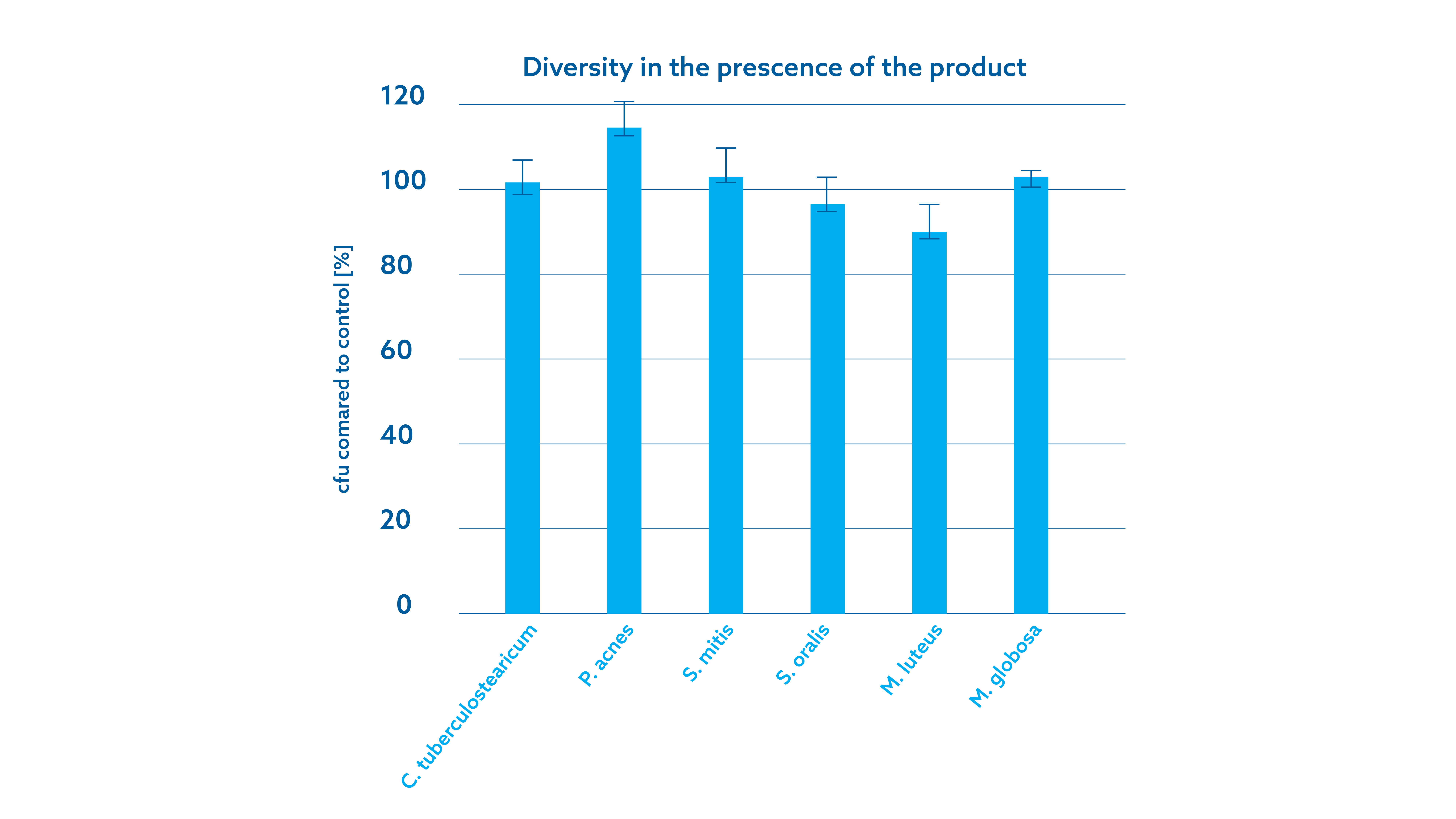
Figure 2. Data on file (A) The balance of Staphylococcus epidermidis and Staphylococcus aureus when incubated with a phosphate-buffered saline control versus the minimal ingredient wipe; (B) The diversity of component organisms of the skin microbiome when in the presence of the minimal ingredient wipe (dry skin).

Expert care for every delicate skin story
From daily diapering tips to deep dives into skin science, explore our Advice & Care guides and our dedicated Skin Care Hub!💧✨