
Hit enter to search or ESC to close
Featured Products


Featured Products

Featured Products




Select your region
-
Europe
-
Americas
-
Africa and Middle East
-
Asia Pacific


From unexpected dryness to increased sensitivity, pregnancy can change the way that your skin behaves. Understanding why these changes happen can make it easier to adapt your routine and care for your skin with confidence.
How can pregnancy affect your skin?
Pregnancy brings significant hormonal and physical changes, and your skin often responds along with the rest of your body.
You might develop dry or sensitive patches, notice new breakouts or see changes in pigmentation, even if your skin was previously easy to manage.
There is no single "pregnancy skin type"—some people become oilier, while others find that familiar products suddenly feel dry or irritating. Your skin may also change more than once throughout your pregnancy.
Rather than trying to correct every change, it can help to focus on comfort, hydration and a routine that feels gentle and manageable.
What can help with dry or tight skin during pregnancy?
As your skin stretches during pregnancy, it may feel drier or more uncomfortable than usual. You might notice tightness after washing, rough or flaky areas, or occasional itching around the abdomen, breasts and thighs.
Although moisturiser cannot prevent stretch marks, regular use can keep the skin soft, hydrated and comfortable.
Small adjustments can make a noticeable difference:
- Bathing adjustments: Choose short, lukewarm showers instead of long, hot showers and avoid rubbing the skin with a towel. Gently pat your skin dry, then apply an unperfumed moisturiser or emollient while the skin is still slightly damp. This helps to seal in moisture.
- Hand care: If handwashing leaves your hands dry, a plain hand cream and gloves for cleaning or washing up can limit repeated exposure to water and detergents.
What if your usual products start to irritate?
Skin that has become more sensitive may sting, feel warm or react more quickly than it did before pregnancy. Fragrance, scrubs, strong exfoliating acids and harsh cleansing products can become difficult to tolerate, particularly when the skin barrier is already dry or unsettled.
This is a good time to strip back your routine rather than adding more products. Dermatologists advise choosing gentle, fragrance-free formulas and avoiding unnecessary harsh ingredients when your skin is more reactive.
When trying a new product, test a small amount on a limited area first and introduce only one product at a time. This makes it easier to identify a reaction. Stop using the product if burning, swelling or a spreading rash develops. If you already manage eczema, rosacea or another skin condition, speak to your GP, midwife or dermatologist before changing prescribed treatment.
What does a gentle pregnancy skincare routine look like?
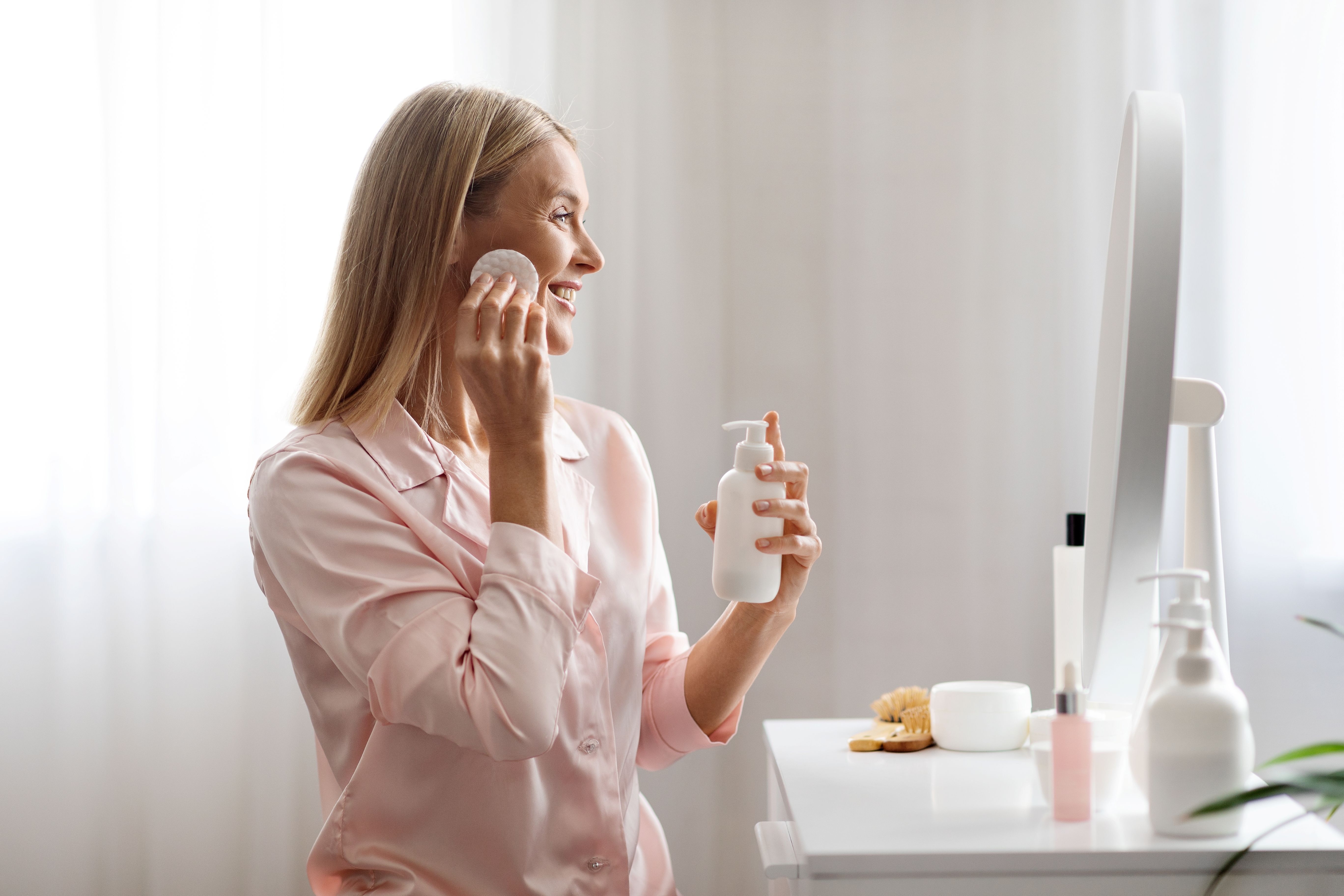
A good routine during pregnancy can be very simple. The aim is to cleanse without stripping the skin, replace moisture and protect against sun exposure. Once those foundations feel comfortable, you can decide whether you need anything else.
- Cleanse without overdoing it: Use a mild, fragrance-free cleanser with lukewarm water, usually once or twice a day. There is no need to scrub—your fingertips are enough.
- Moisturise according to how your skin feels: A light lotion may suit oilier areas, while a cream or ointment can feel more comforting on dry patches. Apply it regularly rather than waiting for irritation to build.
- Protect your skin every day: Wear protective clothing and use a broad-spectrum, water-resistant sunscreen with SPF 30 or higher. If your skin is reactive, a mineral sunscreen containing zinc oxide, titanium dioxide or both may feel gentler.
- Be thoughtful with active ingredients: Before treating acne, pigmentation or any other concern, check ingredients with a healthcare professional. Introduce one treatment at a time and keep the rest of the routine uncomplicated.
How to manage pigmentation or breakouts during pregnancy?
- Pigmentation changes: You may notice darker nipples, a darker line on the abdomen or facial patches known as melasma. Sun exposure can make melasma more noticeable; daily sun protection is an important part of prevention.
- Managing breakouts: Begin with gentle cleansing and non-comedogenic cosmetics rather than using several strong treatments at once. Azelaic acid, topical benzoyl peroxide, topical salicylic acid and glycolic acid are among the over-the-counter options that may be used during pregnancy. As products vary in strength and formulation, check all active ingredients with a healthcare professional.
- Ingredients to avoid: Oral isotretinoin should not be used during pregnancy. Dermatology guidance recommends stopping topical retinoids such as adapalene and tazarotene. Check prescription treatments and cosmetic products carefully, as retinoid ingredients can appear under different names.
When should you get medical advice?
Many skin changes throughout pregnancy are temporary and manageable at home, but you do not have to wait until a symptom becomes severe before asking for help.
Contact your GP, midwife or maternity service if a rash is widespread, repeatedly returns, disrupts daily life or does not improve after following advice from a healthcare professional.
⚠️ Important Symptoms to Monitor
Get advice if itching is intense, worse at night or affects the palms of your hands or soles of your feet. These symptoms can be linked to intrahepatic cholestasis of pregnancy (ICP), a liver condition that needs assessment and treatment.
If you are unsure whether a symptom is simply part of pregnancy, it is always important to ask a healthcare professional. A clinician can assess the pattern, severity and timing and recommend a treatment that is appropriate for pregnancy.
Key Takeaways
• Let comfort guide your routine. Your skincare routine does not need to be perfect or elaborate during pregnancy.
• A mild cleanser, a moisturiser that feels comfortable and reliable sun protection provide a strong foundation.
• Pay attention to how your skin responds, make changes gradually and get advice when a symptom feels unusual or persistent.
• Gentle, consistent care is often the most supportive approach while your skin, and the rest of your body, adapts.
Important Notice
This article provides general information and does not replace advice from your GP, midwife, pharmacist or dermatologist. Always check medicines and active skincare treatments during pregnancy.
References
- American Academy of Dermatology Association, "Dermatologist-approved pregnancy skin care" (2025), https://www.aad.org/public/everyday-care/skin-care-secrets/routine/pregnancy-skin-care
- American College of Obstetricians and Gynecologists, "Skin Conditions During Pregnancy", https://www.acog.org/womens-health/faqs/skin-conditions-during-pregnancy
- British Association of Dermatologists, "Melasma" patient information leaflet (June 2024), https://www.bad.org.uk/pils/melasma
- American Academy of Dermatology Association, "Is any acne treatment safe to use during pregnancy?", https://www.aad.org/public/diseases/acne/derm-treat/pregnancy
- NHS, "Itching in pregnancy" (reviewed 24 February 2026), https://www.nhs.uk/pregnancy/complications/itching-and-intrahepatic-cholestasis/