Hit enter to search or ESC to close
Featured Products

Featured Products
Featured Products

Select your region
-
Europe
-
Americas
-
Africa and Middle East
-
Asia Pacific


Introduction
A baby’s skin is particularly delicate during their first 6 months, and should be kept as free from the dirt, pathogens, irritants and allergens as possible. Gently cleaning a baby’s skin ensures their comfort and minimises exposure to potentially harmful substances. However, a bath is not needed every day – two or three times a week is sufficient,(1,2) with topping and tailing in between. Nappies must, of course, be changed as required: babies with delicate skin may need changing as soon as they wet themselves, while others can wait until before or aft er each feed; all should be changed when soiled.(3) A newborn might need changing up to 12 times a day. That’s over 300 nappies in their first month!
Newborn and young baby skin acts a protective barrier
The skin consists of three main layers: epidermis, dermis and subcutaneous fatty tissue. The epidermis comprises five layers: stratum corneum, stratum lucidum, stratum granulosum, stratum spinosum and stratum basale. The uppermost layer – the stratum corneum – has an important role as a barrier to pathogens, chemicals and allergens.
A newborn and young baby’s skin is different to that of older babies and adults. It is thinner,(4) more permeable,(5) and has a greater surface area:volume ratio (due to a denser network of microrelief lines). (5) Consequently, it is more fragile, less functionally stable and more vulnerable to chemicals, allergens and microorganisms. A preterm baby’s skin is even more delicate and vulnerable due to its immaturity.(6)
Compared with adult skin, a newborn’s stratum corneum is 30% thinner, and the epidermis is 20% thinner; it gradually thickens over the first 12 months.(4)
Skin is less hydrated at birth, but by 1 month is more hydrated than adult skin, although more vulnerable to water loss.(7,8)
Water in the stratum corneum is important for maintenance of barrier function.(8)
Skin pH is neutral at birth (range approx. pH 6.6 to 7.5 depending on the site), and becomes slightly acidic (approx. pH 5) over the following few weeks and months.(8,9)
A thin acidic film on the skin surface, containing sebum, sweat and other factors, is termed the acid mantle; it is highly important for barrier function, including maintaining components of the stratum corneum,(10) supporting a healthy skin microflora(8) and infection control.(11)
Baby skin microflora is developing; it evolves over the first year. The skin’s microflora is involved in disease prevention.(9,11)
Transepidermal water loss (TEWL) is thought to be higher in babies,(8) particularly in the nappy area,(7) and gradually settles by 12 months.(7,12) It fluctuates more than adult skin due in part to a thinner stratum corneum and epidermis.(8,12)
The skin changes over the first 12 months of life: the stratum corneum thickens, the pH stabilises, the microflora matures, and barrier function and waterhandling become more effective.
The skin’s barrier function in younger babies and in babies with eczema is more unstable than that of older babies and children.
Poor or unstable barrier function imparts a vulnerability to developing problematic skin conditions and ill health. It is therefore important to look aft er baby skin appropriately to ensure that the characteristics critical to good barrier function – intact stratum corneum, good hydration, acid mantle and an appropriately developing microflora – are well supported.
The importance of keeping a baby’s skin clean
Baby skin should be kept clean and free of unwanted substances, including irritants (saliva, milk, nasal secretions, urine, faeces and faecal enzymes), dirt, and transient germs.(9) Clean skin helps to keep a baby comfortable and healthy. If not kept clean, the skin’s barrier function can become compromised, increasing the risk for illness and the potential for developing nappy rash5 and/or eczema(13). This is particularly relevant in babies with sensitive skin. The nappy area is vulnerable due to the presence of urine and faeces, and the alkaline environment caused by chemical breakdown of urea.
Frequency and causes of nappy rash and eczema in babies and children
1. Nappy rash
• Nappy rash (contact dermatitis) occurs at least once in up to 50% of babies.(14)
• Prolonged contact of the skin with urine and faeces in the nappy is considered the most important factor.(5)
2. Eczema
• Eczema (atopic dermatitis) occurs in 15 to 30% of children.(15)
• Environmental factors such as the use of soaps, detergents, other chemicals applied to the skin, and even hard water, are linked to development of eczema.(15,16,17)
However, it is important that the cleaning process itself does not disrupt the effectiveness of the skin’s barrier.
Cleaning to protect the skin barrier
• Preserve hydration
• Maintain slightly acid pH
• Support microflora
• Avoid irritation
• Be gentle but thorough, particularly if the skin is already compromised (e.g. excessively dry, nappy rash, eczema)
Frequency of cleaning
Although many parents and their babies enjoy the bathtime experience, there is no need to bath every day: two or three times a week is sufficient.(1,2) On non-bathing days, gently washing by ‘topping and tailing’ along with frequent nappy changes will keep a baby clean and comfortable. In fact, new parents might feel more comfortable waiting a few days before giving their baby a first bath, and may prefer to wash their baby by topping and tailing in the meantime.(18)
Cleaning a baby’s skin
Cleaning exposed areas (hands, eyes, ears, nose, face and neck, and, at times, the feet), the nappy area and, importantly, places that can particularly harbour dirt and germs (skin folds and creases, and the genitals) keeps the skin healthy and reduces the risk of infection.
In cases of mild nappy rash or eczema, a thin layer of barrier cream provides a protective lipid film, which reduces skin contact with faeces/urine, reduces humidity, minimises TEWL and reduces the potential for skin irritation and maceration.(20) Ointments are generally more effective than creams and lotions, and provide a better moisture barrier.(20) If nappy rash is persistent and severe, seek advice from a GP: for inflammation and discomfort, treatment with short-term topical steroids may be sufficient; when candidal infection is suspected, an antifungal may be necessary; when an infection is suspected/ confirmed, an oral antibiotic might be prescribed.(14,20)
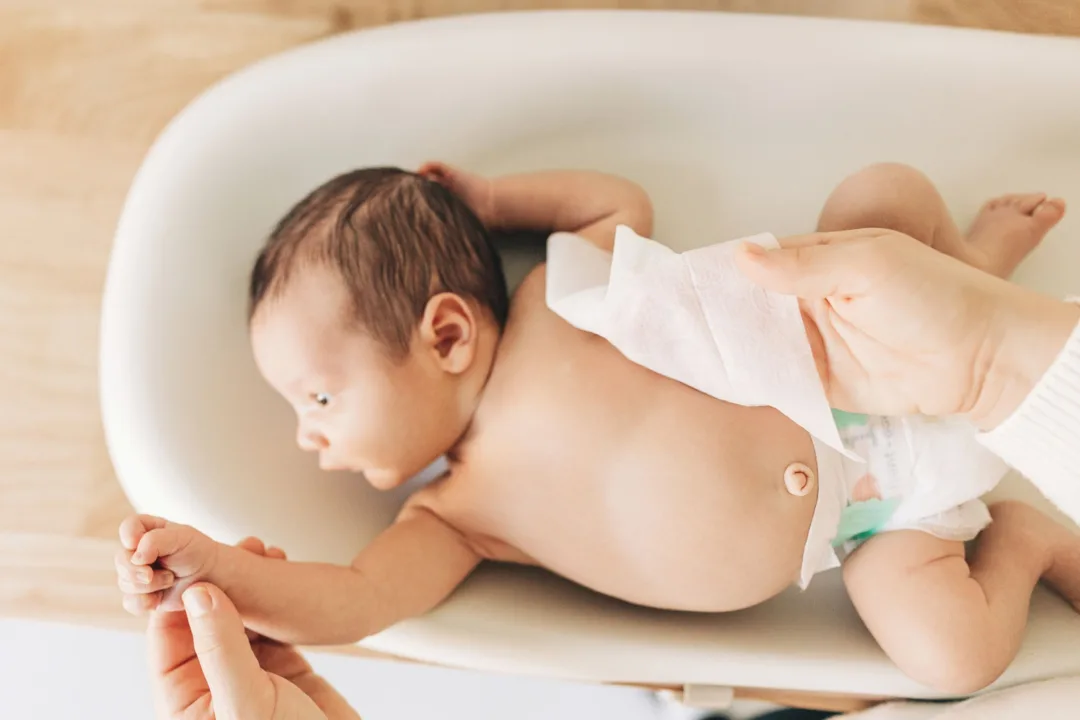
For the ‘topping’ element of topping and tailing, current guidelines from the NHS and the NCT recommend using water and cotton wool.(1,19) For ‘tailing’ (or nappy changing), the advice from the NHS and NICE is to use warm water and cotton wool, or fragrance-free,(3) alcohol-free,(3) non-medicated(21) baby wipes. Both cotton wool and water, and appropriately formulated, non-medicated baby wipes are recommended because they are soft and gentle on a baby’s skin.
However, recent European recommendations(2) go further to propose that if wipes are used, they should: contain pH buffers to maintain slight acidity of the skin; be free from potential irritants such as alcohol, fragrance, essential oils, soap and harsh detergents (e.g. sodium lauryl sulphate); and contain well-tolerated preservatives.
Are water and cotton wool still the ‘best’ option?
Some sources suggest that using tap water alone may not always be the optimal choice for cleaning an infant’s skin – that it might have a drying effect,(9) impose an alkaline environment,(9,22,23) which has the potential to upset the acid mantle, and does not remove oil-soluble material and faeces properly.(9,24,25) Some of these effects may be related to water ‘hardness’ – the mineral content of tapwater.(22)
Nevertheless, a 2016 European Roundtable Meeting(2) concluded that water alone is appropriate for infant skin cleaning, and that, when nappy-changing, the cleaning capability of water alone has not been shown to be inferior to that of baby wipes. Importantly, the NHS continues to support the use of water and cotton wool for topping and tailing, and nappy changing.
What should parents use for everyday cleaning of their baby’s skin?
While it is possible that hard tap water might have an impact on the skin’s barrier function in babies with sensitive skin, nappy rash or eczema, until the latest evidence has been fully assessed and guidelines prepared, parents should be advised to follow NHS and NICE recommendations regarding topping and tailing and nappy changing.(3,21)
Healthcare professionals understand that, in practice, once parents leave the hospital, they find it time-consuming and sometimes difficult to always use cotton wool and water, especially when out and about. The NHS advice regarding the option to use appropriate wipes is therefore very helpful in reassuring parents that convenience need not be a compromise. If parents choose to use wipes for cleaning the nappy area, they should check their ingredients and select carefully to avoid potentially harsh products, e.g. medicants, alcohol, soap and fragrance etc., particularly in younger babies, or if their baby has sensitive skin, nappy rash or eczema.
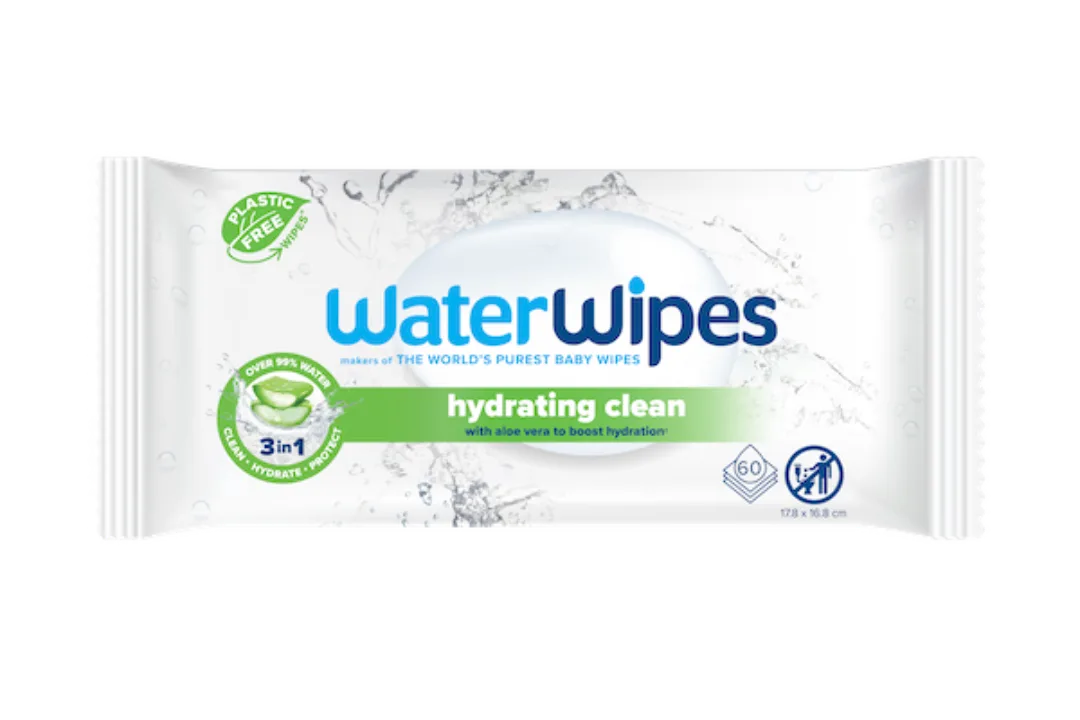
WaterWipes have been specifically developed to be as mild and pure as cotton wool and water, to help maintain the important skin barrier function of the stratum corneum, while offering the convenience of a wipe.
Made from 99.9% high purity water and a drop of Fruit Extract
Soap and fragrance free to help reduce the risk of drying out the skin and the potential development of skin sensitivities
WaterWipes provide safe cleansing for the most delicate newborn skin and are so gentle they can also be used on premature babies
Non-medicated wipe and contain minimal ingredients
Recent research has shown that 97% of midwives and health visitors in the UK, aware of the ‘purity’ credentials of WaterWipes would recommend them.* Furthermore, WaterWipes are the only baby wipe to have secured numerous global accreditations, sponsorships, endorsements and registrations.
* Respondents who were aware of “WaterWipes is the purest baby wipe product in the world because it contains 99.9% water and a drop of fruit extract and no unnecessary ingredients”.
References
1. NHS 2018a: Topping and tailing tips. Your pregnancy and baby guide. https://www.nhs.uk/conditions/pregnancy-andbaby/washing-your-baby/ . Accessed 06 June 2019.
2. Blume-Peytava U, Lavender T, Jenerowicz D et al. Recommendations from a European Roundtable Meeting on Best Practice Healthy Infant Skin Care. Pediatric Dermatology 2016;33(3):311-321. Doi: 10.1111/pde.12819.
3. NHS 2018b: How to change your baby’s nappy. Your pregnancy and baby guide. https://www.nhs.uk/conditions/pregnancy-and-baby/nappies/?tabname=your-newborn. Accessed 06 June 2019.
4. Stamatas N, Nikolovski J, Luedtke MA, Kollias N, Wiegand BC. Infant skin microstructure assessed in vivo differs from adult skin in organization and at the cellular level. Pediatric Dermatology 2010;27(2):125-31.
5. Sznurkowska K, Liberek A, Brzozowska K et al. Evaluation of a new cosmetic topical formulation in the management of irritant diaper dermatitis. SelfCare 2015:6(S1):12-24.
6. Jackson A. Time to review newborn skincare. Infant 2008;4(5):168-171.
7. Oranges T, Dini V, Romanelli M. Skin physiology of the neonate and infant: Clinical implications. Advances in Wound Care 2015;4(10):587-595.
8. Stamatas GN, Nikolovski J, Mack MC, Kollias N. Infant skin physiology and development during the first years of life: A review of recent findings based on in vivo studies. International Journal of Cosmetic Science 2011;33:17-24.
9. Telofski LS, Morello AP, Mack Correa MK, Stamatas GN. The infant skin barrier: Can we preserve, protect and enhance the barrier? Dermatology Research and Practice 2012;2012:1-18. Doi: 10.1155/2012/198789
10. Cooke A, Bedwell C, Campbell M, McGwan L, Ersser SJ, Lavender T. Skin care for healthy babies at term: A systematic review of the evidence. Midwidery 2018; 56:29-43.
11. Egert M, Simmering R, Riedel CU. The association of the skin microbiota with health, immunity, and disease. Clinical Pharmacology and Therapeutics 2017;102(1):62-69
12. Nikolovski J, Stamatas GN, Kollias N, Wiegand BC. Transport properties of infant stratum corneum are different from adult and continue to develop through the first year of life. Journal of Investigative Dermatology 2008;128(7)1728-1736.
13. Horimukai K, Morita K, Narita M et al. Transepidermal water loss measurement during infancy can predict the subsequent development of atopic dermatitis regardless of filaggrin mutations. Allergology International 2016;65:103-108.
14. Atherton D & Mills K. What can be done to keep babies’ skin healthy? Midwives Magazine 2004;7(7):288-290.
15. Danby SG, Brown K, Wigley AM et al. The effect of water hardness on surfactant deposition after washing and subsequent skin irritation in atopic dermatitis patients and healthy control subjects. Journal of Investigative Dermatology 2018;138:68-77.
16. British Association of Dermatologists. Atopic Eczema. http://www.bad.org.uk/for-the-public/patient-information-leaflets/atopic-eczema/?showmore=1&returnlink=http%3A%2F%2Fwww.bad.org.uk%2Ffor-the-public%2Fpatient-informationleaflets#.XO0_tohKjIU. Accessed 06 June 2019.
17. Perkin MR, Craven J, Logan K et al. Association between domestic water hardness, chlorine, and atopic dermatitis risk in early life: A population-based cross-sectional study. Journal of Allergy and Clinical Immunology 2016;138(2):509-516.
18. NHS 2019. Tips for new parents. Your pregnancy and baby guide. https://www.nhs.uk/conditions/pregnancy-andbaby/being-a-parent/. Accessed 19 July 2019.
19. National Childbirth Trust: A guide to topping and tailing. https://www.nct.org.uk/baby-toddler/everyday-care/guidetopping-and-tailing. Accessed 06 June 2019.
20.NICE 2018. Nappy rash. Management of nappy rash. https:// cks.nice.org.uk/nappy-rash#!scenario. Accessed 06 June 2018.
21. NICE 2015. 1.4 Maintaining infant health: Physical health and wellbeing: Skin. 1.4.23. https://www.nice.org.uk/guidance/ cg37/chapter/1-Recommendations#maintaining-infanthealth. Accessed 06 June 2019.
22.Tsai T-F & Maibach HI. How irritant is water: an overview. Contact Dermatitis 1999;41:311-314.
23.Lavender T, Furber C, Campbell M et al. Effect on skin hydration of using baby wipes to vlean the napkin area of newborn babies: assessor-blinded randomised controlled equivalence trial. Pediatrics 2012;12:59. http:www. biomedcentral.com/147-2431/12/59.
24.Walters RM, Fevola MJ, LiBrizzi JJ, Martin K. Designing cleansers for the unique needs of baby skin. Cosmetics & Toiletries Magazine 2008;123(12)53-60.
25.Gelmetti C. Skin cleansing in children. Journal of the European Academy of Dermatology and Venereology 2001;15(1)12-15.
More on the Skincare Hub
View allThe Science of WaterWipes - Clinical and Scientific Summary
Discover how WaterWipes, made with minimal ingredients and maximum care, are clinically proven to be the world’s purest wipes for sensitive skin. Backed by dermatological testing and scientific validation. Explore the evidence that supports our commitment to purity, safety, and skin health.

Dry Skin vs Dehydrated Skin: What’s the Difference and How to care for it?
What’s the Difference and How To Care For It?