
Hit enter to search or ESC to close
Featured Products



Featured Products

Featured Products




Select your region
-
Europe
-
Americas
-
Africa and Middle East
-
Asia Pacific
Perimenopause and Intimate Changes: A Gentle Guide

Perimenopause is a natural life stage, but the changes it brings can sometimes feel unexpected. As hormone levels begin to shift in the years leading up to menopause, many women notice changes throughout the body, including intimate discomfort, dryness, sensitivity, and changes in odour or discharge.
These symptoms are common, yet they are not always talked about openly. For many women, intimate changes during perimenopause can feel confusing or frustrating, especially when they appear gradually over time.
The good news is that gentle daily care, simple lifestyle adjustments, and understanding what is happening in your body can help you feel more comfortable and confident during this transition.
This guide explains common intimate changes during perimenopause and how to care for yourself with comfort and sensitivity.
What Is Perimenopause and When Does It Start?
Perimenopause is the transitional phase before menopause, when hormone levels, particularly oestrogen, begin to fluctuate. It often starts in the 40s, although for some women it may begin earlier or later.1.
This stage can last several years and may bring symptoms such as irregular periods, hot flushes, sleep disruption, mood changes, and vaginal or intimate discomfort.
Every woman’s experience is different. Some notice only mild changes, while others experience more noticeable symptoms.
Can Perimenopause Cause Vaginal Dryness?
Yes, vaginal dryness is one of the most common intimate symptoms during perimenopause. As oestrogen levels change, tissues in the vaginal and vulval area may become drier, thinner, or less naturally lubricated.2.
This can lead to feelings of dryness, irritation, itching, or discomfort during intimacy. Some women may also notice increased sensitivity to products or friction from clothing.
Choosing gentle, fragrance-free care products and speaking with a healthcare professional if symptoms persist can help improve comfort.
Why Does My Intimate Area Feel More Sensitive During Perimenopause?
Hormonal changes can affect the delicate skin and tissues of the intimate area, making them feel more reactive than before. Products that once felt fine may suddenly sting, irritate, or feel uncomfortable.3.
This is often because the skin barrier becomes more delicate and moisture levels may decrease. Tight clothing, sweating, shaving, or fragranced products can sometimes make sensitivity worse.
Switching to gentle cleansing and soft, skin-kind products can help support comfort.
Can Perimenopause Change Vaginal Odour or Discharge?
Yes, some women notice changes in odour or discharge during perimenopause. Hormonal shifts can affect vaginal pH and moisture balance, which may lead to subtle changes in scent or consistency.4.
Mild changes can be a normal part of this stage of life. However, a strong odour, itching, burning, or unusual discharge may indicate irritation or infection and should be checked by a healthcare professional.
Daily gentle cleansing and breathable underwear may help you feel fresher and more comfortable.
How Do You Stay Fresh During Perimenopause?
Many women look for simple ways to feel clean and comfortable throughout the day, especially if symptoms such as hot flushes, sweating, discharge changes, or sensitivity increase.5.
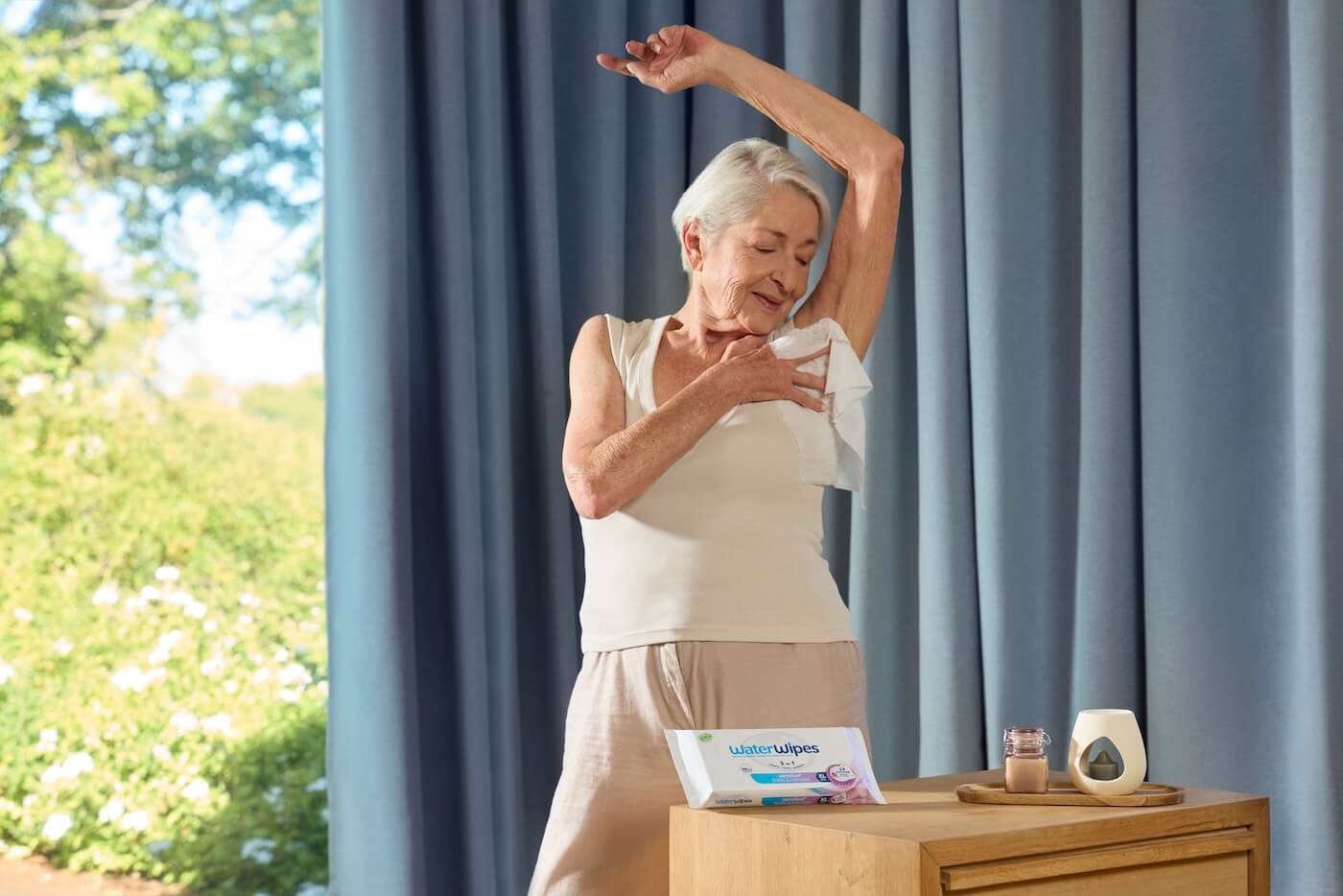
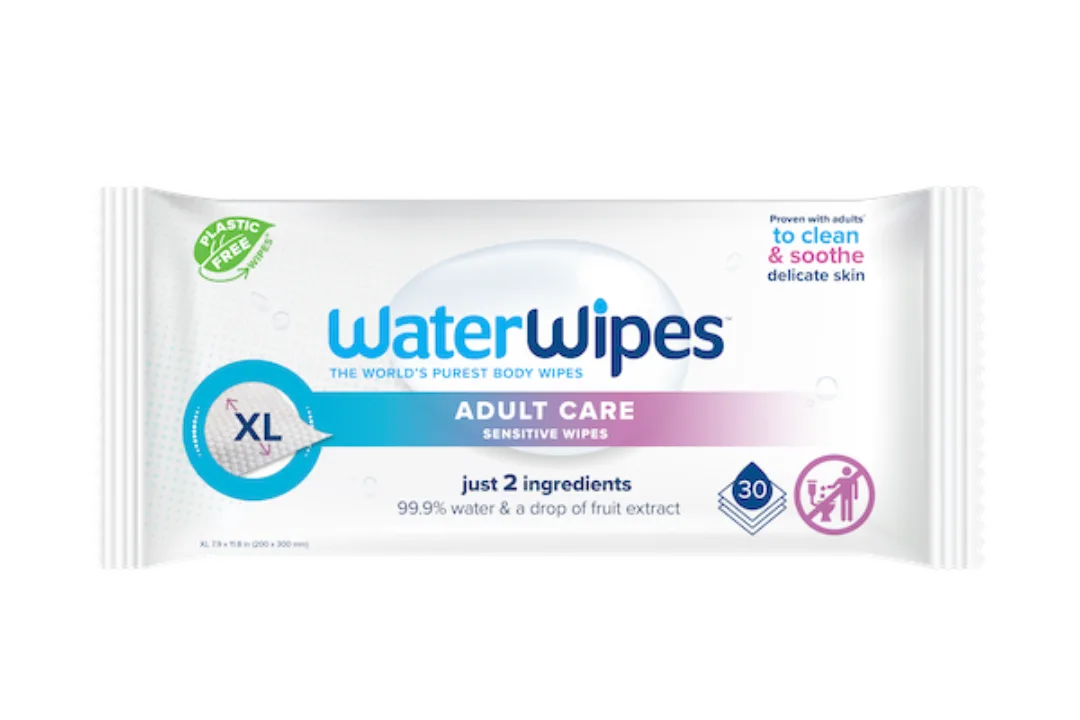
Gentle cleansing wipes designed for intimate skin can be a practical option when at home or on the go. WaterWipes™ Feminine Cleansing Wipes, are designed to help women feel clean, fresh, and comfortable while being kind to delicate intimate skin.
Choosing breathable clothing, changing underwear regularly, and staying hydrated may also help support freshness.
What Helps Intimate Dryness During Perimenopause?
Simple steps can often make a difference. Avoiding harsh soaps, wearing breathable cotton underwear, and using products designed for sensitive intimate skin may help reduce discomfort.
Some women also benefit from vaginal moisturisers or lubricants, particularly if dryness affects day-to-day comfort or intimacy. If symptoms are ongoing, a healthcare professional can advise on additional treatment options.
Can Perimenopause Affect Confidence?
Yes, intimate changes can affect confidence and emotional wellbeing. Feeling uncomfortable, dealing with dryness, or worrying about odour can sometimes lead to frustration or self-consciousness.
It is important to remember that these changes are common and nothing to feel embarrassed about. Understanding what is happening and finding products and routines that work for you can help you feel more in control and comfortable.
Bottom Line
Perimenopause can bring a range of intimate changes, including dryness, sensitivity, and shifts in freshness or comfort. While these symptoms can feel frustrating, they are common and manageable.
Gentle daily care, supportive products, and speaking openly with a healthcare professional when needed can help you navigate this stage with confidence.
For everyday comfort and freshness, explore the WaterWipes™ Advice and Care Hub.
References
- https://www.mayoclinic.org/diseases-conditions/perimenopause/symptoms-causes/syc-20354666
- https://my.clevelandclinic.org/health/symptoms/21027-vaginal-dryness
- https://my.clevelandclinic.org/health/diseases/21608-perimenopause
- https://www.health.harvard.edu/womens-health/why-has-my-natural-scent-changed-during-perimenopause
- https://www.nhs.uk/conditions/menopause/things-you-can-do/
FAQs: Perimenopause and Intimate Changes
- Can perimenopause make you feel itchy down there?
Yes, dryness and hormonal changes can sometimes lead to itching or irritation in the intimate area. - Is increased sweating normal during perimenopause?
Yes, hot flushes and hormonal changes can increase sweating, which may affect comfort and freshness. - Should I use soap on intimate skin during perimenopause?
Harsh soaps may sometimes worsen dryness or irritation. Many women prefer gentler cleansing options designed for intimate skin. - Can perimenopause affect intimacy?
Yes, dryness or discomfort can affect intimacy for some women, but support and treatment options are available. - Can stress make perimenopause symptoms feel worse?
For some women, stress may make symptoms such as sweating, irritation, or discomfort feel more noticeable. Stress can also affect sleep and overall wellbeing. - Does perimenopause increase the risk of irritation after exercise?
It can for some women. Sweat, friction, and tighter activewear may feel less comfortable if intimate skin is already dry or sensitive. Changing clothes promptly after exercise may help. - Can perimenopause cause changes in pH balance?
Yes, hormonal changes may influence vaginal pH, which can sometimes contribute to dryness, discomfort, or changes in odour.